
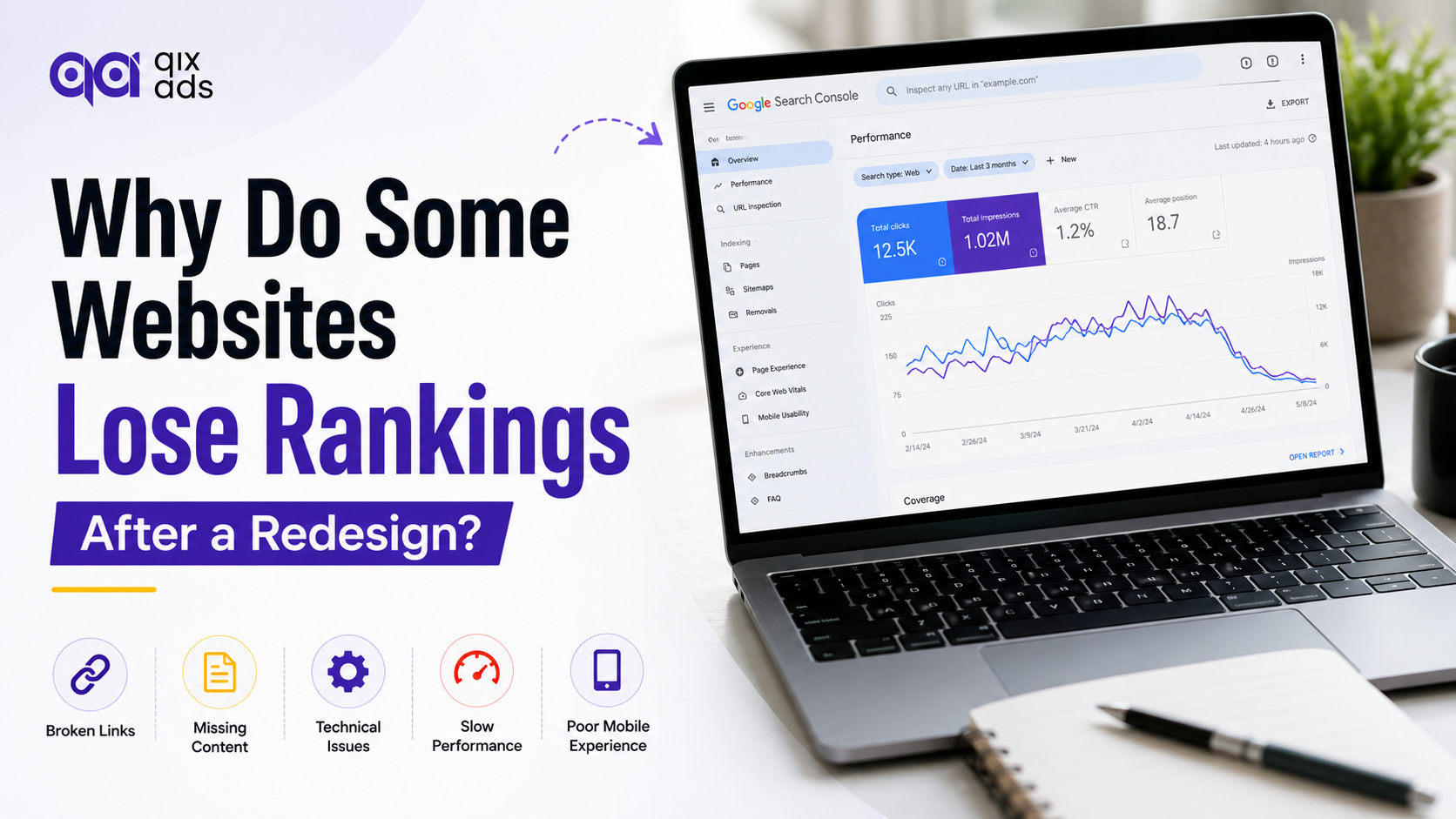
Redesigning your website can improve its appearance, user experience, and conversions. However, many businesses notice a sudden drop in their Google rankings after launching a redesigned website. This happens when important SEO elements are overlooked during the redesign process. A successful website redesign isn’t just about aesthetics—it’s about preserving the authority your website has built over time. At Qix Ads, the best digital marketing agency in Perinthalmanna, we help businesses redesign their websites while protecting their search engine rankings and organic traffic. Why Does a Website Lose Rankings After a Redesign? Search engines evaluate much more than how a website looks. They consider your URLs, page content, metadata, internal links, page speed, mobile experience, and technical SEO. If these elements change without proper planning, Google may temporarily—or even permanently—reduce your rankings. The good news is that most ranking losses are preventable. 1. URLs Are Changed Without 301 Redirects One of the biggest causes of ranking loss is changing page URLs without creating proper 301 redirects. For example: Old URL: yourwebsite.com/services New URL: yourwebsite.com/our-services Without a redirect, search engines treat the new page as completely different, causing the old page’s authority to disappear. Solution: Create 301 redirects for every URL that changes during the redesign. 2. Valuable Content Is Removed Many redesigned websites replace detailed content with shorter sections to create a cleaner look. Although the website may appear more modern, removing keyword-rich content can reduce your visibility in search results. Instead of deleting content, update and improve it while maintaining its SEO value. 3. SEO Metadata Is Lost Title tags, meta descriptions, and heading structures often disappear during a redesign. These elements help Google understand your pages and influence click-through rates. Always review: SEO titles Meta descriptions H1 and H2 headings Image alt text before launching your new website. 4. Internal Links Become Broken Internal links help search engines crawl your website and distribute authority across pages. When URLs change without updating internal links, users may encounter broken pages, and Google may struggle to discover important content. Regularly audit your website for broken links after launching. 5. Technical SEO Problems Even beautifully designed websites can suffer from technical SEO issues. Common problems include: Incorrect robots.txt file Missing XML sitemap Broken canonical tags Accidental “noindex” settings Crawl errors Duplicate content These issues prevent search engines from indexing your website correctly. 6. Slow Website Speed Modern websites often include large images, videos, animations, and scripts. While these features improve visual appeal, they can significantly reduce page speed if not optimized. Google rewards websites that load quickly and provide a smooth user experience. Compress images, enable caching, and remove unnecessary scripts to improve performance. 7. Poor Mobile Experience Google uses mobile-first indexing, meaning it primarily evaluates the mobile version of your website. A redesigned website should be: Fully responsive Fast on mobile devices Easy to navigate Optimized for touch interactions A poor mobile experience can negatively affect both rankings and conversions. 8. Analytics and Tracking Are Missing Some businesses forget to reconnect: Google Analytics Google Tag Manager Google Search Console Without these tools, it’s difficult to monitor traffic, rankings, or identify SEO issues after launch. Always verify your tracking setup before making the redesigned website live. Why SEO Should Be Part of Every Website Redesign Many businesses invest heavily in website design but neglect SEO until after the launch. Unfortunately, fixing SEO issues later often takes more time and resources than addressing them during development. Partnering with the best digital marketing agency in Perinthalmanna ensures that your redesign includes technical SEO, content optimization, performance improvements, and post-launch monitoring from the beginning. Whether you’re a local business in Malappuram or serving customers across Kerala, combining great design with a strong SEO strategy helps maintain your online visibility and supports long-term business growth. Website Redesign SEO Checklist Before launching your redesigned website, make sure you: ✔ Back up the existing website ✔ Create 301 redirects ✔ Preserve valuable content ✔ Optimize title tags and meta descriptions ✔ Update internal links ✔ Improve page speed ✔ Generate an XML sitemap ✔ Review robots.txt ✔ Verify canonical tags ✔ Connect Google Analytics and Search Console ✔ Test mobile responsiveness A website redesign should improve your business—not reduce your online visibility. By preserving your existing SEO value, implementing proper redirects, maintaining optimized content, and testing every technical element before launch, you can protect your rankings while delivering a better experience for your visitors. If you’re planning a website redesign, Qix Ads, the best digital marketing agency in Perinthalmanna, provides SEO, website optimization, branding, Meta Ads, Google Ads, and digital marketing solutions for businesses across Malappuram and Kerala. Our team helps businesses redesign websites without sacrificing search rankings, ensuring long-term growth through proven digital marketing strategies. Frequently Asked Questions Why do websites lose rankings after a redesign? The most common reasons include changed URLs, missing redirects, deleted content, broken internal links, slow page speed, and technical SEO issues. Can a website redesign improve SEO? Yes. A well-planned redesign can improve page speed, user experience, Core Web Vitals, and overall search performance when SEO is included from the start. Should I hire an SEO expert before redesigning my website? Yes. Working with an experienced digital marketing agency in Kerala can help identify SEO risks before launch, reducing the chances of ranking loss. The most common reasons include changed URLs, missing redirects, deleted content, broken internal links, slow page speed, and technical SEO issues. Yes. A well-planned redesign can improve page speed, user experience, Core Web Vitals, and overall search performance when SEO is included from the start. Yes. Working with an experienced digital marketing agency in Kerala can help identify SEO risks before launch, reducing the chances of ranking loss.